

What you will learn in the Deep Work PDF:
- What deep work means and how it can help you focus in spite of distractions
- 3 advantages you instantly acquire when you practice deep work in your work and life
- 3 steps you can take to implement deep work
- How to effectively train yourself to maintain a healthy state of deep work
- Why a “deep life” is a good life
About the Author
Cal Newport is a full-time assistant professor of computer science at Georgetown University. Having already written 5 amazing self-improvement books, Cal is definitely someone who can teach entrepreneurs a lot about productivity, especially with his book, Deep Work, Rules: For Focused Success In A Distracted World.
What is Deep Work?
Deep work is a specific type of work activity among all the different types of work activities that you can do: it’s when you’re focusing without distraction on a cognitively demanding task.
Cal Newport claims deep work as something like a killer app in the knowledge economy.
“It’s incredibly powerful and valuable, so I’m trying to spread the word that if you learn how to do this tier one skill, and do a lot of this, you can have huge acceleration in your career.”
Why Should We Learn and Practice Deep Work?
Deep work is important in this day and age, given so much distraction all around us.
If we go back 100 years ago, deep work was valuable only for a very small fraction of the economy. There were only a few people, maybe some scientists and professional thinkers and writers, for whom deep work actually helped their career. But for the vast majority of people in the worldwide economy who are doing mainly manual jobs, the ability to perform deep work didn’t matter.
A big argument the book is making: things have shifted. As we’ve moved increasingly towards a knowledge economy, deep work is becoming much more universally valuable, mainly for the following 3 reasons.
Key Points: 3 Advantages of Deep Work
Advantage 1: Deep work helps you learn things more quickly
In an increasingly competitive knowledge economy, the ability to keep up with ever-changing complex ideas and systems is becoming crucial. So deep work is the tool you need to actually accomplish that goal.
If you focus intensely on work and at protecting and scheduling that time —
- It will make you better at your job
- It enables you to actually learn complicated things quickly
- You can pick up complex new skills and ideas easily — a consensus among economists these days
- You’re at a huge advantage in the current knowledge economy
To do that, almost by definition — looking at the psychology or neuroscience of it, you have to be in a state of deep work.
What happens when you’re trying to learn a new complicated task (or when you’re doing deep work):
- You’re focusing very intensely on the new activity in the absence of other types of distractions.
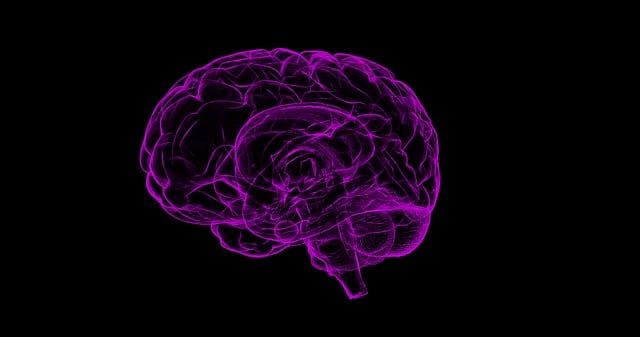
- A neurocircuit relevant to this new skill or idea is able to fire repeatedly in near isolation, because you’re focusing on it intensely. This triggers a certain type of cell to begin laying a sheath of a protein material called Myelin around the neuron cell body.
Myelin is essentially an insulator which allows those circuits to fire faster and more easily going forward. This Myelination is an interesting advance in neuroscience in which we now actually know what’s happening at the level of the neurons.
What happens if you’re not focusing on something very intensely without distraction:
- You’re not going to get the Myelin sheaths laid down.
- You’re not going to learn what you’re trying to.
So if you’re also checking Facebook and you jump to your inbox every 15 minutes and then you give it another 5 or 10 minutes at the level of the neurons, you’re really not going to be able to master the task very quickly, which puts you at a big disadvantage.
If you’re one of the few who do deep work and can pick up this skill quickly, you’re at a huge advantage. You’re never going to see a top athlete in training or a top chess player or a musician playing their violin while also looking at their phone out of the corner of their eye, because they know they’re not going to get better.
“We don’t yet have such embodied knowledge in the world of knowledge work, we’re not as good at understanding practice and improvement, but the same principles apply. It’s like being a professional basketball player before people figured out about jump shots and how to do conditioning. You have these huge advantages. I think that’s what’s going on here with knowledge work. If you’re one of the few to leverage the skill of deep work, it’s just going to give you this big competitive advantage over everyone else who’s not yet so familiar with the importance of it.”

The ‘Attention Residue’ effect
A key reason for this is advantage a very important effect known as “attention residue.”
- A residue is left in your brain if you’re focusing on a particular work and then you switch your attention to another one
- The residue is from that original work that you were looking at
- That residue can take 10 to 30 minutes to clear out of your head
While that residue is present, you are performing at a cognitively reduced capacity. Here’s why:
- You’re not able to fire on all mental cylinders,
- You still have a residue gunking up the works, taking some of your attention, making it a little bit harder to focus.
- You’re not producing your best work
- You’re producing stuff at a much lower rate of productivity.
Advantage 2: Deep work helps you produce more output with higher quality
If you really do deep work — long periods of time with zero distractions where you’re really focusing hard — it can seem almost like a “superpower” at first.
You just produce stuff at such a faster rate at such higher quality that it can even baffle people, make them wondering — I don’t understand how you do this, where are you finding the time to get it done?
When you’re in a deep work session, you don’t switch your attention to something else and back again. You allow all of the residue to clear out, and once it’s all cleared out, you would be able to get more work done and at a higher level quality per hour invested.
“I think this is really important in part because we’ve had this evolution in the way knowledge workers think about productivity. Back in the late 1990s, people were doing actual multitasking, so they would have an inbox window open at the same time as something else and they would be talking on the phone.”
Multitasking is a Myth
“We’re not able to do it. It makes you worse at everything.”
In the last decade, people have moved away from multitasking. But what people are doing instead is what Cal calls a bunch of “just-checks.” People are working on the primary task, but every 10 or 15 minutes they do a quick “just check.”
They say — Let me just see if something came in important in my email inbox… Well, I’m a little bit bored, let me just check Facebook real quick to see if there’s something interesting there and then let me come back…

The problem with “just checks”
The attention residue theory tells us that this is disastrous for your productivity. Each ‘just check’ you do to an inbox or Facebook or a browser tab gives you a thick, fresh slathering of attention residue. What happens is you’re not producing your smartest thoughts and you’re producing a just fraction of your possible output.
Turn away from the email inbox
Email inboxes are a mechanism that’s designed to create the maximum attention residue in the shortest amount of time. When you look at it, you’re almost certainly going to see something that requires your attention. You’re going to see a thing from your boss or a colleague.
“You know you’re going to have to respond to them a little bit later that day but you don’t really have time to do it at the moment. And that’s killer. That’s, that’s as bad as seeing a heated political discussion because we all have this experience of writing emails in our head. I’m sure this is very familiar where you’re walking and you’re in the shower and you find yourself like writing a response to an email.”
No one ever changed the world by having a fast email response time.
The stuff that matters is where you have skills that you’re applying at your highest level. That’s the stuff that makes an impact.
Advantage 3: Your life will be more meaningful
A philosophical benefit when your day is filled with a lot of deep work is that the day will be more meaningful and will feel more satisfying.

People whose careers are built around deep work like their work a lot better. Here’s why:
- The mind constructs its understanding of its world based on what we pay attention to. So if you’re constantly paying attention to a lot of small and trivial things, social media, and constant communication, the sense of the world your mind creates is that it’s so frenetic and stressful as there’s all of these mind traps that you’re triggering.
- If you spend lots of your time just focused on a small number of things that are valuable, you’re creating things that are really valuable.
- A deep worker might be incredibly productive and effective but if asked “how are you?” they’re unlikely to say “busy.” They’ll say, “Oh, I’m doing pretty well… Let me tell you something I’ve been working on that I’m pretty proud of…”
It’s a totally different type of worldview.
On a broader scale, in life in general:
- Deep work makes your background anxiety lower.
- It makes you more satisfied with life, which is just as important as its economic benefits.
So now you’re probably wondering:
How can I minimize the impact so that I have as much energy and time as possible for the deep stuff that actually moves the needle?

How to Implement Deep Work: 3 Big Ideas
To successfully transition into a deep work type of lifestyle, the book offers the following ideas.
- Deep work is an ability that has to be trained.
You can’t just assume that you know how to focus really intensely. It’s just a matter of doing it.
- Deep work is an ability that must be supported.
Go out of your way on how you approach your work. Schedule your work and manage your time to make sure that deep work has a place of priority.
- Deep work is an ability that has to be fought for.
This goes contrary to a lot of trends right now in the world of work and society, generally. To make deep work a priority, you’re going to be pushing back on some trends out there, like the “importance” of connectivity, social media, and of being busy.
Train Yourself
People often get this wrong: they think about deep work as a habit, like flossing or something they often do.
The reality: deep work is absolutely a trained skill, like playing the guitar, and it’s something that you haven’t practiced systematically. You shouldn’t expect to do it.
What happens when you get Deep Work wrong:
- It’s easy to get frustrated early on.
- A lot of people will say — yeah, I should try to focus more. Maybe they set aside some time, say I’m just going to concentrate, but it doesn’t go well.
- The mind is rebelling.
- People can’t really concentrate because they haven’t practiced it yet.
- And then they go back to what they’re doing before.
But when you understand that you have to train it first, those types of experiences are not so frustrating because you say — well, of course, I’m not that great at it, I haven’t really done a lot of training, but I also have confidence that I could get better if I put in the time.
What to do: Detox your brain from an addiction to novel stimuli.
- If your brain has been trained at the slightest hint of boredom, it’s going to get a novel stimuli delivered through a web browser or your phone.
- If you’ve trained your brain to expect this at all times, it’s not going to be able to work deeply when it’s time to work deeply.
- But when you’re actually concentrated on the same thing for a long amount of time, the brain just won’t be able to tolerate the lack of novel stimuli
- You can push your brain until it concentrates deeper and deeper, and here, any sort of skill or activity that gives you immediate feedback about your effectiveness helps. It could be like playing poker or bridge, athletic endeavors that really require you to focus, and understand where all the players are on the field in order to do it well.
The Science of Deliberate Practice
Deliberate practice means:
- Pushing yourself past your comfort level
- Getting very specific feedback on what you’re doing right or not
Deliberate practice is how people become good at things that are hard. And so any type of game or activity that allows you to do deliberate-practice on something cognitive is like doing pull-ups for your brain.
Inspiration for Deep Work
Charles Darwin
Charles Darwin did his thinking everyday on the ideas behind the Origin of Species. He had a particular path that he would walk through the grounds of his estate in England and that helped him switch into the mindset of deep thinking.
Theodore Roosevelt
Theodore Roosevelt was famous for his ability to work deeply. Deep work allowed him to produce a massive amount of high-quality work for a relatively limited amount of hours spent. He’s a great example of deep work acting like a superpower.
Deep work, for example, was how he was able to get good grades at Harvard University. When he was in law school at Columbia, while also involved in political life after Harvard, he could do his studying with such intensity that in one hour he could get done what the typical semi-distracted undergrad might spend three to four hours doing.
He also wrote what ended up being an incredibly influential book on naval strategy. The Naval War of 1812 was his first published book. He wrote this on the side while having a very busy life as a student and a member of the society.
Action Guide on Scheduling Deep Work
There are different ways and philosophies of how you can schedule deep work professionally. It depends on your personality and on the type of job you have.
- Bimodal philosophy – This is where you occasionally put aside a large amount of time, about 1-3 days, where you do nothing but deep work.
- No email
- No social media
- Simply no distraction during those periods
But outside of those periods you’re just doing your normal work, more shallow without a lot of intense thinking, and you’re accessible.
- Rhythmic philosophy – You set the same time for the same days every week for doing deep work. Most people find this much more effective to do.
When you schedule deep work, you don’t leave it up to chance. But keep in mind that the type of routine you use to get deep work into your schedule can differ from what other people are doing. You just need to match a scheduling philosophy to the specifics of your personality and your particular job demands. This minimizes the energy required to slip into that mindset.
Conclusion
A Deep Life is a Good Life
In our time, deep work is no longer a sort of affectation of a very small number of people who think for a living. Deep work is not a scale that’s just relevant to philosophers, professors, novelists, and others in the knowledge economy.
Deep work being a sort of a killer app in the knowledge economy is something Cal can hardly stress enough.
If you have a non-entry level knowledge job, if you’re doing something more than just administrative work, if you’re doing something more than just moving messages around – and you make deep work a priority in your life — train it like you would train any other tier one skill.
Go out of your way and fight to make it at the center of your working life.
- You are going to produce much more than your peers.
- You’re going to produce at a much higher quality.
- You’re going to pick up new skills and ideas very quickly.
“In our current economy, deep work has so many powerful benefits, so that’s why I’m so excited about this idea and this conclusion that any way you look at it, a deep life is a good life.”
Find out more about Deep Work and the other works of Cal Newport on www.calnewport.com. He has a blog, otherwise he says he is relatively hard to contact. As many know, Cal never had a social media account on purpose. He also does not have a general purpose email address. Still, he is professionally successful, has friends, and knows what’s going on in the world.
Related Readings
1. The Power of Full Engagement by Jim Loehr
2. The Organized Mind by Daniel Levitin
3. Essentialism by Greg McKeown
4. Mini Habits by Stephen Guise